Two flights of No 12 Squadron were transferred to the newly formed No 13 Squadron (13SQN) on the morning of 1 June 1940 at the civilian Ross Smith Aerodrome in Darwin. The newly formed 13SQN would relocate to the also newly established RAAF Station Darwin on 8 June 1940. By the end of June 1940, the squadron consisted of four officers, five cadets, and 207 airmen, and had re-equipped from Anson to Hudson aircraft.
The first patrol to be completed by 13SQN was a coastal patrol flight between Darwin and Broome. Flight Lieutenant (FLTLT) Lush completed this patrol in Anson N4970 on 4 June 1940.
During their first six months of operation, 13SQN developed to incorporate three flights (A, B, and C) as well as a headquarters (HQ) section. The three flights and HQ would be mostly based in the Northern Territory throughout the Second World War. Deployments to other Australian and overseas locations also occurred.
During 1942, 13SQN suffered considerably, with personnel at Ambon and Darwin enduring fierce Japanese aerial attacks, often with little warning.
In 1943, the squadron converted to Beaufort and Ventura aircraft. The change in aircraft enabled the squadron to more effectively carry out their escort, patrol, attack and search engagements against the Japanese.The last activity undertaken by members of 13SQN was the evacuation of Australian prisoners of war. The squadron was advised via ‘postagram’ on 7 January 1946 that the squadron would “cease to function immediately and prepare to disband in situ. Essential disbandment [to] be completed by 15 January [1946].” The squadron was based in Labuan in Malaysia when the disbandment order was received.
On 1 July 1989, 13SQN was re-formed at Darwin with six reserve personnel. The initial commanding officer in 1989 was FLTLT I K Fraser, who acted in the role until FLTLT B Thomas was available. This was similar to the squadron’s original formation in 1940 under temporary command by FLTLT John Balmer.
In December 1989, Leading Aircraftwoman F Hogg became the first woman posted to 13SQN, with FLTLT A Troutman becoming the first female officer of 13SQN shortly afterwards.
The squadron participated in numerous exercises throughout the Second World War and since re-forming in 1989, with the first Exercise Pitch Black occurring at RAAF Base Darwin in 1991.
Exercises were not the only contributions towards the efforts of the RAAF. The squadron has also assisted with Operations Warden and Tanager (East Timor, 1999–2000), Operation Bali Assist (Bali bombings, 2002), Operation Sumatra Assist (Southeast Asia tsunami, 2004) and Operation Acolyte (Melbourne Commonwealth Games, 2006).
Today, 13SQN is based at RAAF Base Darwin and continues to provide combat support to Australian and allied forces transiting through or from the base. The majority of day-to-day operations include logistics, personnel support, operational support, planning and deployments, as well as supporting exercises. Additional support is provided to the local Darwin community when natural disasters occur (e.g. clean-up efforts in 2016 after Cyclone Marcus).
Gathered here are some of our 13SQN stories compiled as part of History and Heritage – Air Force’s Living History Program.
Corporal Chelsea Coggins
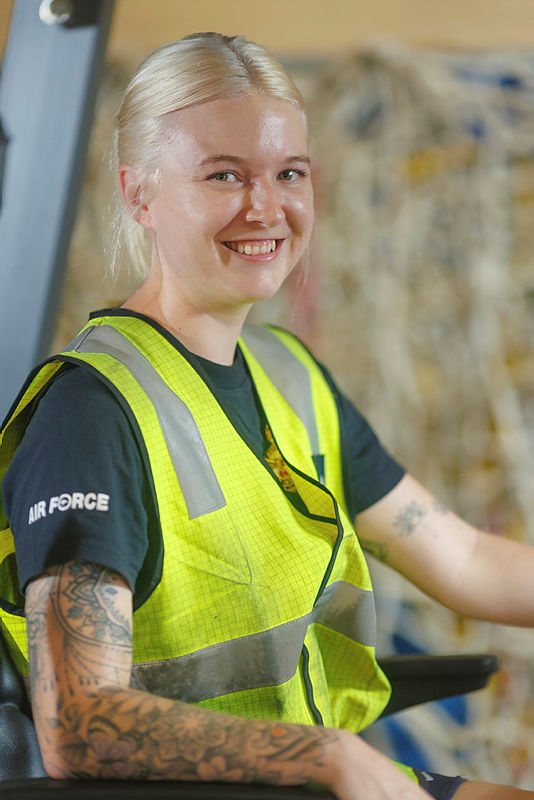
In Year 10, Army recruitment officers visited my high school, and I was immediately drawn to the discipline they demonstrated. I had considered joining the Army, but my mum noticed how much I enjoyed watching the F-111s flying near our house and nudged me towards the Air Force. Eighteen months after finishing high school, I enlisted in the movements mustering. The role appealed to me because it combined two things I wanted from a career: the chance to help people and the opportunity to travel.
I spent my first six years at RAAF Amberley before moving in 2025 to 13SQN in Darwin. My experience with the squadron during Exercise Talisman Sabre was a major highlight of my time with 13SQN. Preparation was critical, and once the exercise began, it was non-stop for me and my troops. Every day we accomplished something meaningful.
This year, when the commanding officer spoke to the squadron about our intent, one line stayed with me: ‘You are here for everyone else.’ That perfectly captures what it means to serve in air movements.
Learning the history of 13SQN in Ambon (1941–42) reinforced this perspective for me. Morale was critical back then; even building machine-gun pits gave the troops a sense of purpose and agency.
Corporal Craig Griffin
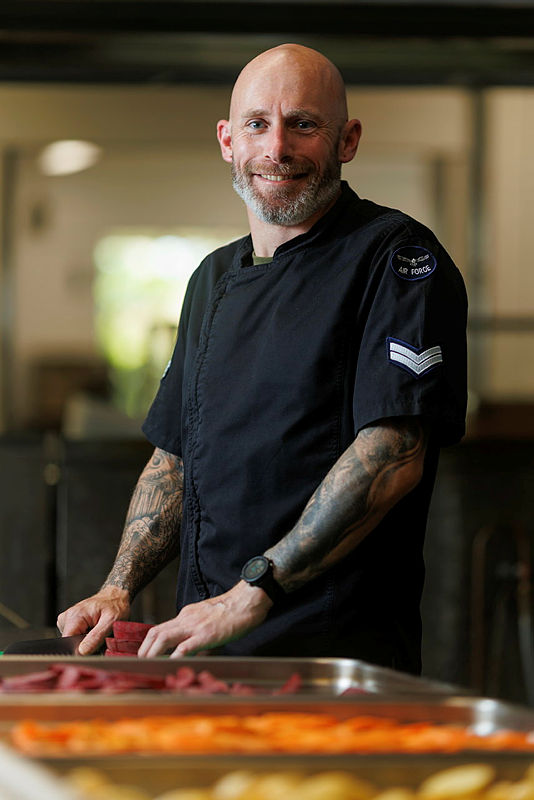
My Dad was in the British Army, so military service was always something I aspired to. After falling in love with Australia and obtaining my citizenship, I approached a recruiting office. The recruiting officer convinced me that Air Force would best suit me and my family. Being a chef in the Air Force not only gives me stability and sociable work hours, but it also encourages me to develop as a chef and as a person.
Cooking is a life skill and food is a universal language. I take great pride in the food I prepare and cook as an Air Force chef because I’m cooking for my peers.
Exercise Pitch Black in 2024 certainly demonstrated how versatile, resilient and adaptable catering is and needs to be. I was part of an international team of Air Force chefs who were based out of several locations around RAAF Base Darwin, and three times a day we fed thousands of our peers.
Learning the history of 13SQN in Ambon during 1942 made me reflect on the squadron’s current intent of united and ready warfighters.
The united and ready mentality was obvious to me during Pitch Black and again during Exercise Talisman Sabre in 2025. The catering section embraced the squadron’s intent of united and ready warfighters during this exercise. We are a section that cannot fail: we must perform our core role three times a day, 365 days a year.
Corporal Keo Harris
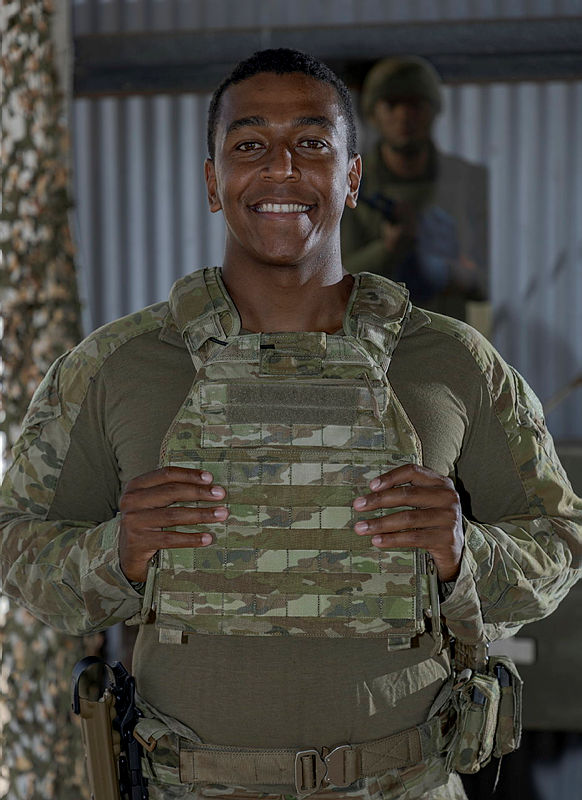
I’ve been an airfield defence guard (now Security Forces [SECFOR]) in the Air Force since enlisting in September 2018.
I joined 13SQN in 2025 as a member of SECFORCE and, so far, my involvement in Exercise Talisman Sabre has been my most rewarding experience. During Talisman Sabre, I embraced working alongside like-minded individuals and units from our Five Eye allies.
Learning about 13SQN’s history, particularly of the events of January 1942 in Ambon, has been inspiring. Stories like that of Sergeant (SGT) Frederick Gaskin, the armourer who volunteered to stay behind, really stands out to me, as he demonstrated courage during difficult conditions. SGT Hack also stands out to me: despite being so unlucky, he was resilient. Understanding and connecting with the squadron’s history has enabled me to better appreciate the squadron’s intent of united and ready warfighters.
The role of SECFOR members is founded on a war-ready mentality and that gives me a sense of something more meaningful as I carry out my role. Having the whole squadron embrace the united and ready warfighters intent has already brought all sections of 13SQN closer together.
For anyone thinking about a career like mine, my advice is simply: go for it. There are no dead ends in the Air Force, only opportunities.
Corporal Long Luu
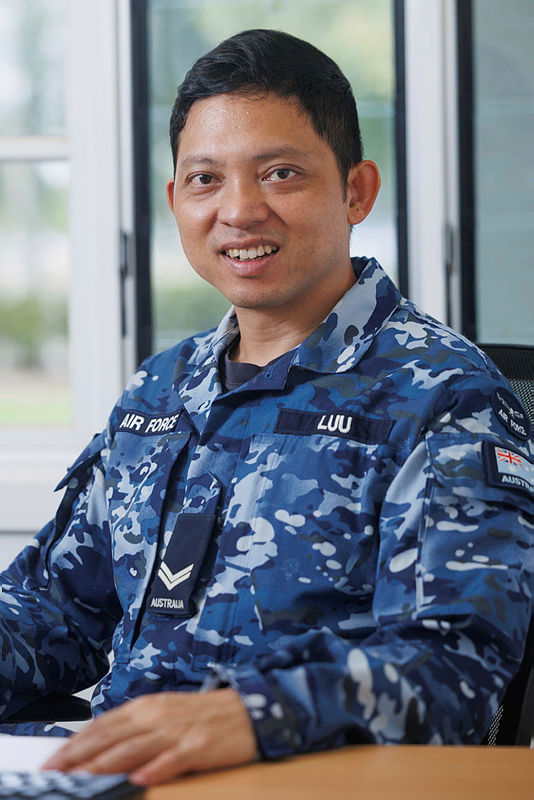
I’ve been a personnel capability specialist (PCS) with Air Force for six years. Prior to my role as a PCS, I was a clerk in the Army for 14 years.
This is my third year with 13SQN and it’s hard to choose just one highlight of my time with the squadron. I’ve had the privilege of representing not only Air Force, but specifically 13SQN, at Parliament House in Canberra with the 13SQN commanding officer, as well as overseas during exercises in Malaysia. The satisfaction and pride of being a PCS comes from the continuous support and acknowledgement of my work from my peers.
I really do believe that having worked outside of Defence first gave me the opportunity to appreciate what Defence does for me in all aspects of my life.
This appreciation also comes from knowing my squadron’s history. Having recently learned about the role 13SQN played in Ambon throughout January 1942, I really understand and appreciate admin roles within a unit. When the Operations Record Book for January 1942 briefly described how the orderly room, except two clerks, were relocated to Ambon, this small mention of the orderly room and clerks reminded me that we play such a vital role in the effective running of a squadron.
You can read more about 13SQN in the linked booklet