No 3 Squadron (3SQN) was originally established at Point Cook in September 1916 and was the first Australian Flying Corps squadron to arrive on the Western Front. It operated from a number of airfields in France and Belgium between August 1917 and the Armistice on 11 November 1918, serving with distinction in support of ground forces. After the war, the squadron returned to Australia and was disestablished, and dormant until 1922 when it briefly reappeared before being closed down again. On 1 July 1925, 3SQN was re-formed at RAAF Richmond with a mix of aircraft.
After the Second World War started, 3SQN was deployed to Egypt, where it operated in an army cooperation role before transitioning to fighter operations. The squadron served with distinction in the Middle East and the Mediterranean, having destroyed more enemy aircraft than any other RAAF unit.
In 1948, 3SQN was re-formed at RAAF Fairbairn and, in 1956, it re-equipped with the Australian-built Sabre CA-27 jet fighter at RAAF Williamtown. 3SQN was based at Butterworth in Malaya (later Malaysia) from 1958 to 1967 before relocating to Williamtown and re-equipping with Australian-built Mirage IIIO fighters. 3SQN re-deployed to Butterworth in 1969 and remained there until 1986 as a key element of the Integrated Air Defence System before returning to Williamtown to re-equip with its new Australian-produced Hornet F/A-18 aircraft. In 2016, the squadron deployed an element to the Middle East in support of Operation Okra and, in 2017, the Hornet took its last flight with 3SQN before being replaced by the 5th-generation Lockheed-Martin F-35A Lightning II in 2018.
Gathered here are some of our 3SQN stories compiled as part of History and Heritage – Air Force’s Living History Program.
Leading Aircraftwoman Rosalie Frichot
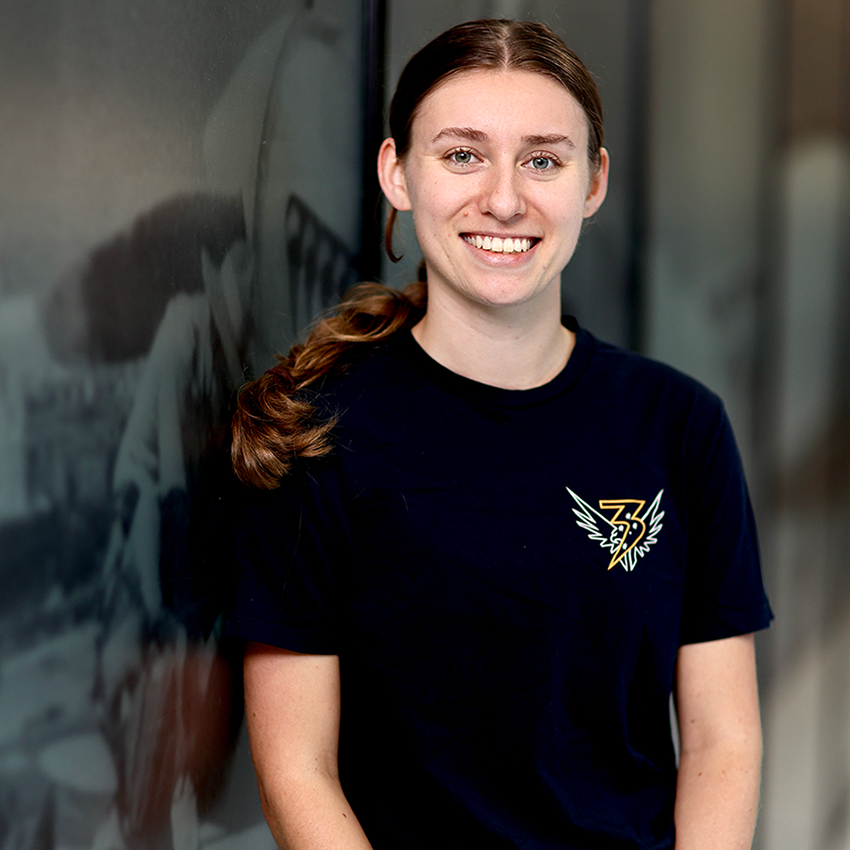
I was born in Darwin. When I reached high school, I didn’t think I wanted to go to university straight away and I decided to take part in the Air Force gap year program as an aviation support technician. After recruit training, I gained experience at 35SQN at Amberley in Queensland and decided that I wanted to join the RAAF full time.
While I was waiting to start my initial employment training, I had some great experiences, including being involved in Exercise Christmas Hop, where RAAF C-27 Spartan transport planes visited remote communities in northern Australia.
Since being posted to 3SQN as an avionics technician in 2022, I’ve had some great experiences, including deployments to the US for exercises, and being involved in Exercise Pitch Black in Darwin where I saw firsthand how well we can operate with other air forces.
One of the most interesting stories in 3SQN relates to the First World War fighter ace, the Red Baron, and how he was shot down near 3SQN’s aerodrome in France. The squadron recovered the Red Baron and his plane and gave him a full military funeral. The fact that they honoured him, as an enemy, reflects the continuing values that we have, which is pretty inspiring.
Sergeant Rauf Barker
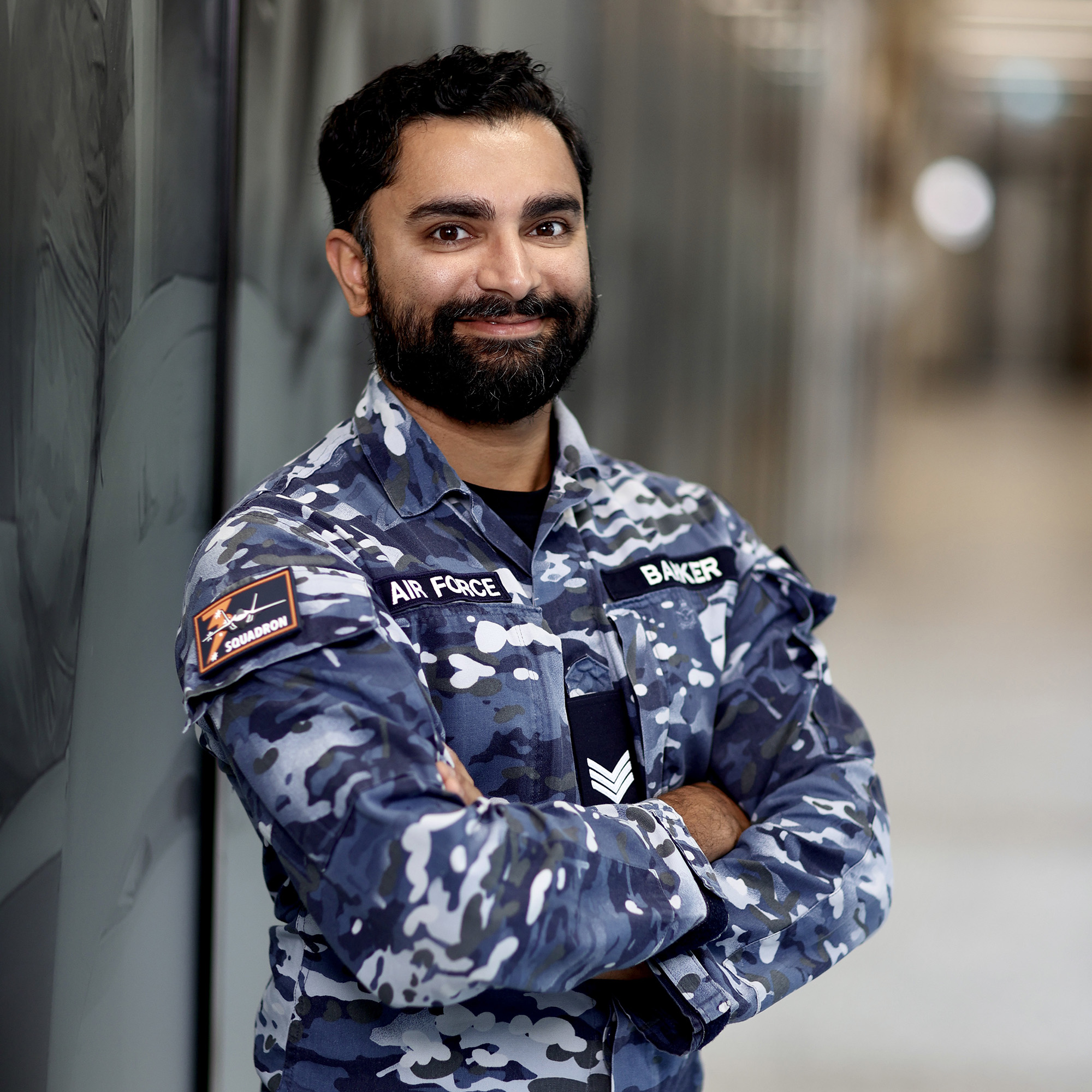
I was born in India, but lived there for a very short time before living in Thailand for about nine years. My family migrated to Australia when I was about nine years old and we settled in Sydney. After completing high school in Sydney, I started looking at different career options. I wasn’t committed to completing a degree at that time and wondered how I could give back to my country [Australia]. I thought the military was a great choice and eventually settled on the Air Force due to my interest in aviation.
I joined in 2008, and after completing recruit training and then initial training as an aircraft technician, I was posted to 37SQN which was operating C-130 Hercules transport aircraft. There were lots of opportunities to go on deployments and exercises, which made the work really interesting. After spending 11 years working on the Hercules, I thought about doing something different, and ended up spending a year learning Thai at the Defence Force School of Languages.
From my own experience, I would say that a career in the Air Force provides you with work that has an impact. It builds confidence, discipline, and resilience that serve you well for the rest of your life. The work is challenging but rewarding.
Leading Aircraftman Nathan Ide
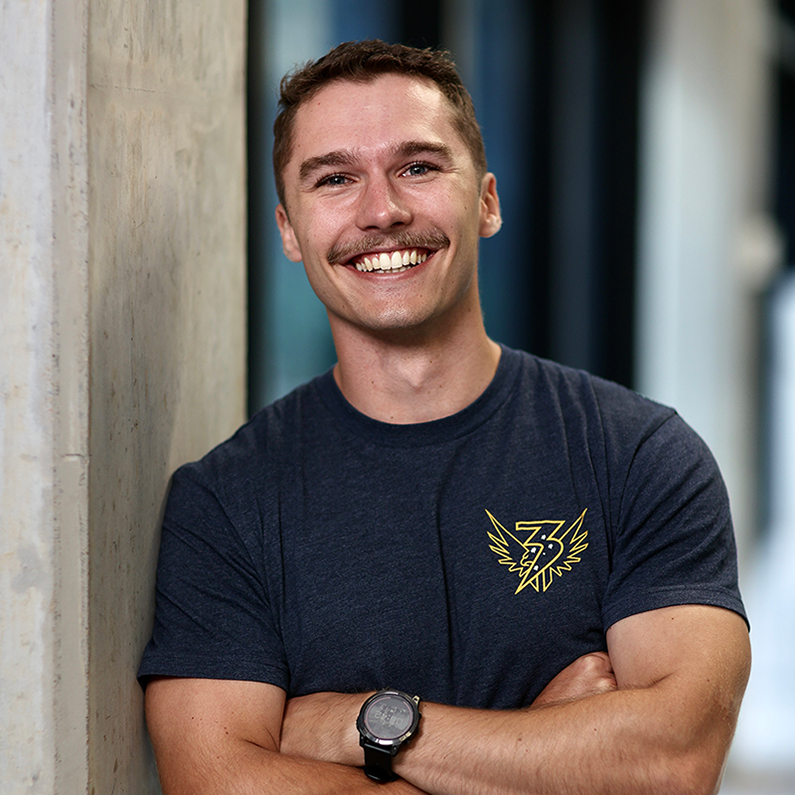
I grew up on the New South Wales Central Coast at Erina. I was inspired to join the RAAF in 2022 after doing some contracting work at Williamtown, where I had the opportunity to learn about the Air Force. What I heard made me interested enough to try it out for myself. After going through the recruitment process and being selected, I enlisted and was sent to RAAF Wagga for 11 weeks of recruit training where I learned all the basic military skills.
I’ve had some really interesting experiences since being posted to 3SQN. I’ve been fortunate to deploy to the US a couple of times, including on Exercise Red Flag in Nevada, where we had the opportunity to work alongside our US counterparts. I’ve also been to Japan on Exercise Bushido Guardian, where we worked alongside the US and the Japanese and learned how they operate.
Apart from learning about wider traditions in the RAAF, it’s been interesting to learn about the history of 3SQN. Our unit has the nickname ‘the milk drinkers’ because in the First World War, squadron personnel were given a ration of milk and a ration of rum in the afternoon and they mixed them together. During unit dining-in nights on base, we will have a drink of milk and rum to honour the tradition.
Leading Aircraftwoman Chloey Shallue
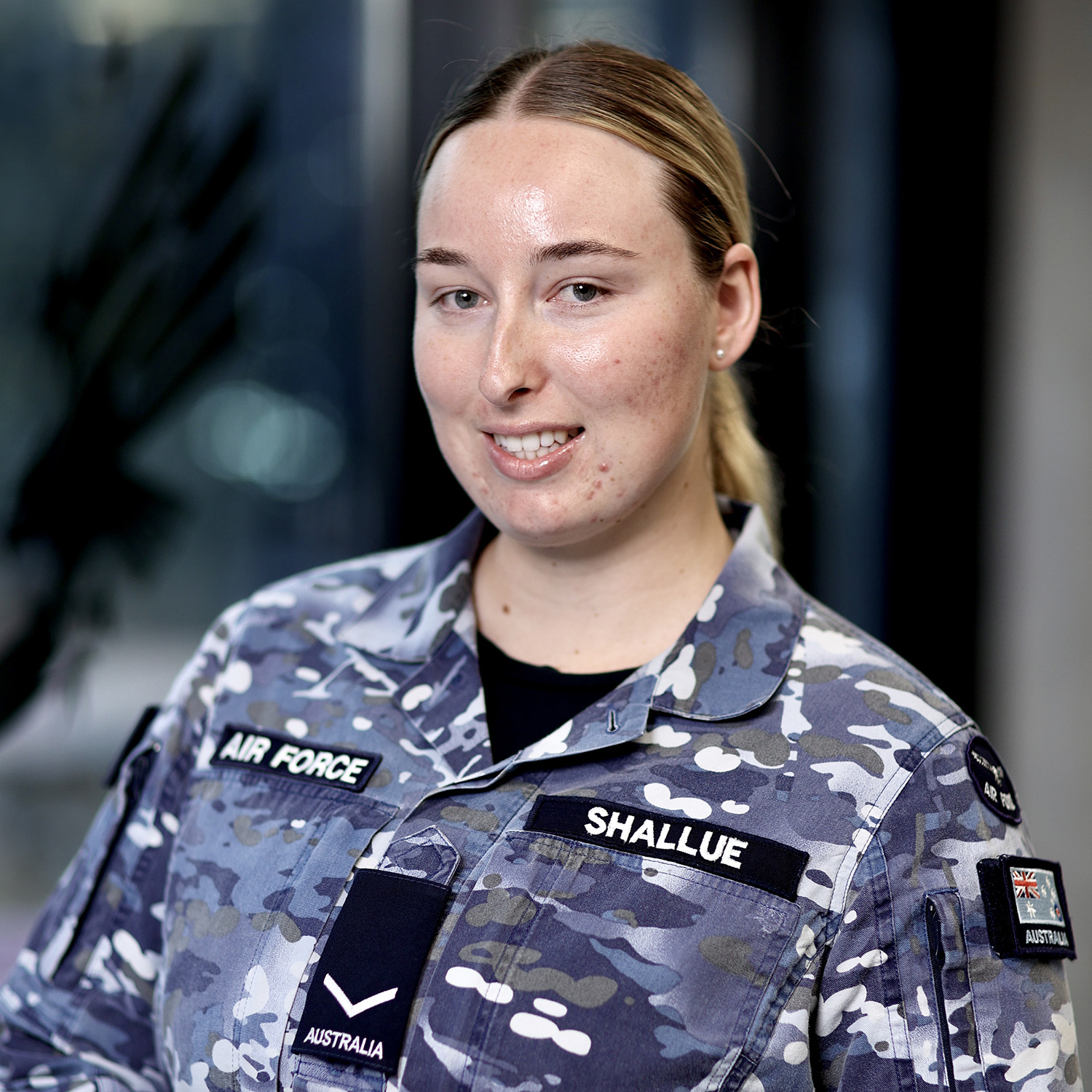
I grew up in Beechworth, a small country town just south of Albury/Wodonga on the New South Wales/Victoria border. I worked at the supermarket and went to high school in Wangaratta. I moved out of home at 19 to go to Albury and began to study, but decided I wanted to experience something completely new. While I wanted to work in an administrative role, the Air Force offered a mix of a career and adventure. I hadn’t left the country before, so I was pretty keen to go somewhere else, gain new experiences, and meet new people. I joined the RAAF in 2024 and after basic training I became a Personnel Capability Specialist (PCS) and was posted to 3SQN in late 2024.
Being a part of 3SQN, one of the founding squadrons of the Air Force, is a privilege. I’ve heard so many stories of the unit’s history, including from Julie Gibbes, the daughter of our longest-serving commanding officer, Bobby Gibbes. Being able to talk to her about her recollections of her dad during the Second World War is just amazing.
Being a PCS means you are there to help everyone in the squadron, from the day they arrive until their last day in the unit. It’s really satisfying to make connections with people and support them.
Aircraftman Mohammed Ibrahim
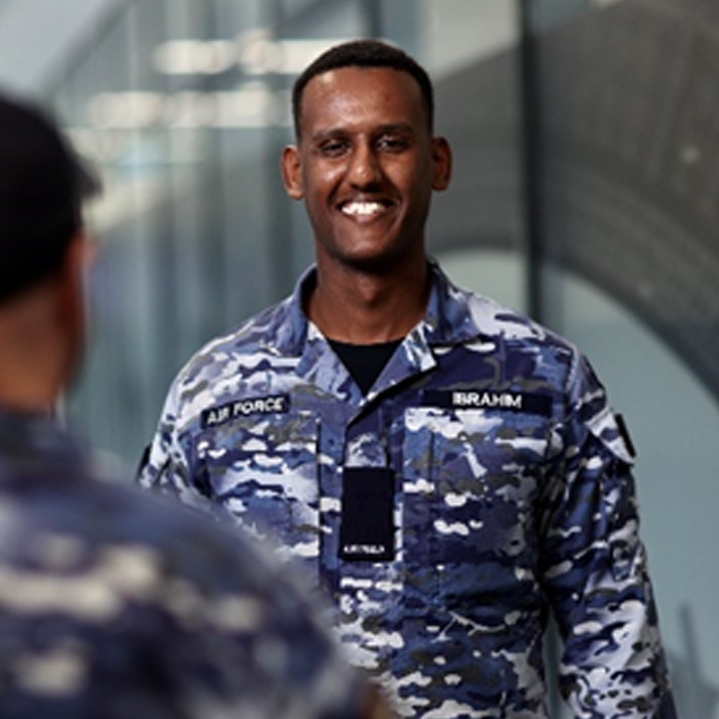
I was born in a place called Kassala in Sudan and arrived in Australia as a kid in 2006 after fleeing the civil war with my family. It was challenging to come to a new country but we adapted really well. I went to school and grew up in Brisbane and have spent most of my life there. My best mate joined the RAAF after finishing high school and after seeing the opportunities that gave him in terms of training, travel, and personal development I decided to join too. After going through the recruitment process I enlisted in October 2024. I really enjoyed recruit training, including learning about the Defence values, military drill, and weapons training. I then did specialist logistics training in Albury-Wodonga at South Bandiana Army base, where we and our Army counterparts learned a lot from each other. After that I was posted to 3SQN and have been here since then.
I love working at 3SQN and supporting our F-35 jet operations. I’ve learned a lot in my time here and have been happy at how easy it’s been to become a part of the squadron. Everybody has been really welcoming and open. I went on my first exercise last year, supporting the F-35s while they were conducting bombing practice at Tindal in the Northern Territory. It was interesting to see how things work on exercise. Everyone is just focused on getting the job done and people don’t obsess about rank. It was a great experience to meet new people and learn how things are done at other units.
Every week my work takes me into the Len Waters building at Williamtown. I did some research on Waters to get a better understanding of his life, which was really interesting. He was the Air Force’s first Aboriginal fighter pilot, and flew P-40 Kittyhawk fighters in the Second World War. It was inspiring to learn about the hardships he experienced in his life. He didn’t give up on his dream of being a pilot, and kept going in spite of the challenges. It’s also been great to learn about the heritage of 3SQN.
For anyone considering joining the Air Force I’d say accept the challenge and pursue your dreams. The experiences I have had in my brief time in the RAAF have been amazing, and while you may have to serve in difficult conditions, it’s worth it. Just seize all the opportunities for professional and personal development that you can get. Over the next few years I hope to go on an international deployment. While being promoted is important, the experiences are more important, like taking part in the Remembrance Day parade last year in Newcastle.
Flight Lieutenant Max
My family has a long history of military service, so I was always motivated to join up myself. I wanted to work as part of a small team, doing really high-end and active work, so after finishing school, I joined the RAAF and spent four years at the Australian Defence Force Academy (ADFA) in Canberra. After graduation from ADFA, I completed several years of intensive training through basic and intermediate pilots courses, lead-in fighter training on the Hawk 127 and conversion training on the F-35A, before being posted to 3SQN.
Learning about the history of 3SQN has been inspiring, including the story of Nicky Barr, our most famous fighter ace of the Second World War. He was born in New Zealand and raised in Australia, and played rugby for Australia before the war. He served with 3SQN in the Middle East, flying combat missions over Egypt and Syria in the P-40 Kittyhawk.
He was shot down three times during the war, and escaped from prisoner of war camps several times. My main takeaway from Barr’s story for 3SQN pilots is that while he was an amazing pilot, his courage, determination and leadership was what led the squadron to victory.
About Thomas Carmody
Thomas James Carmody was born in Ballarat East in Victoria on 15 April 1892, the eldest of six children of Michael Carmody and Mary McManamny. A telephone mechanic in Warrnambool prior to the First World War, Tom enlisted as a private (later called 1st Air Mechanic) in what was to become 3SQN, Australian Flying Corps, on 8 September 1916.
Tom served with distinction during the war, becoming the only Australian to have been awarded the Meritorious Service Medal for Gallantry twice.
Discover the remarkable story of Tom Carmody in the linked booklet or view the video below.
For more on the medals he received decades after his wartime service, read the Defence News article, War hero's medals awarded after 80 years.