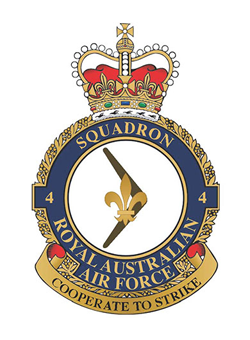
No 4 Squadron (4SQN) formed at Point Cook, Victoria, on 16 October 1916 from the personnel trained on the 6th Course held at the Aviation School of Instruction, Australian Flying Corps. The Squadron’s coming of age was the Battle of Cambrai on the Western Front in 1917, flying Sopwith Camels. During its time on the Western Front, 4SQN performed fighter sweeps, provided air support for the Army, and raided German airstrips. By the end of the First World War, 4SQN claimed more kills than any other AFC unit.
The Second World War saw 4SQN equipped with Avro Ansons, de Havilland Moth Minors and, later, CAC Wirraway and Boomerang aircraft.
Today, 4SQN is based at RAAF Base Williamtown.
Gathered here are some of our 4SQN stories compiled as part of History and Heritage – Air Force’s Living History Program.
Leading Aircraftman Thomas Mellor
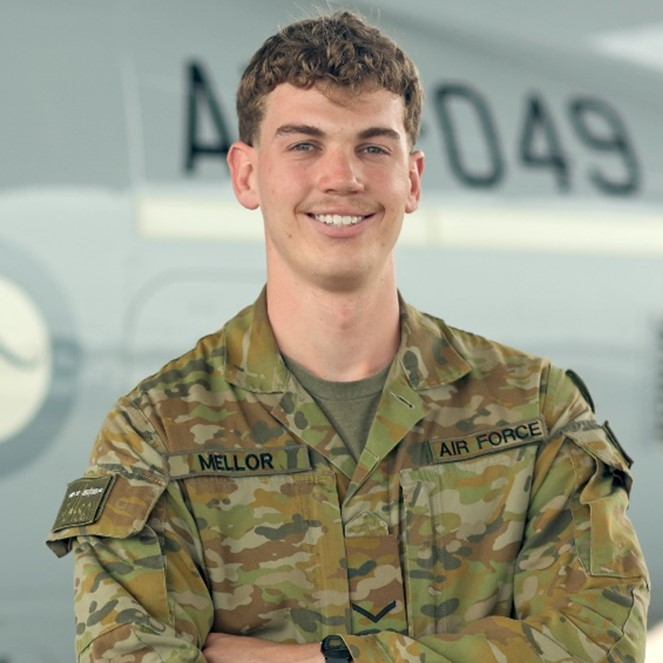
I grew up in Adelaide and, halfway through school, I found the Air Force interesting. After doing some research, I thought, I want to do that.
One of the things Air Force does really well during recruiting is it gets you comfortable in uncomfortable situations ... We get a lot of new and unique experiences here at 4 Squadron, so that’s very enjoyable, and the teamwork that we demonstrate is something that puts a lot of smiles on our faces and makes us enjoy coming to work.
The history of 4 Squadron definitely matters ... It’s always good to remember what the people have done before you and why you are here and what you’re trying to accomplish, to keep their legacy going ... A lot of people describe Air Force as like a family: that term definitely hits home.
Captain Nathan Lauigner
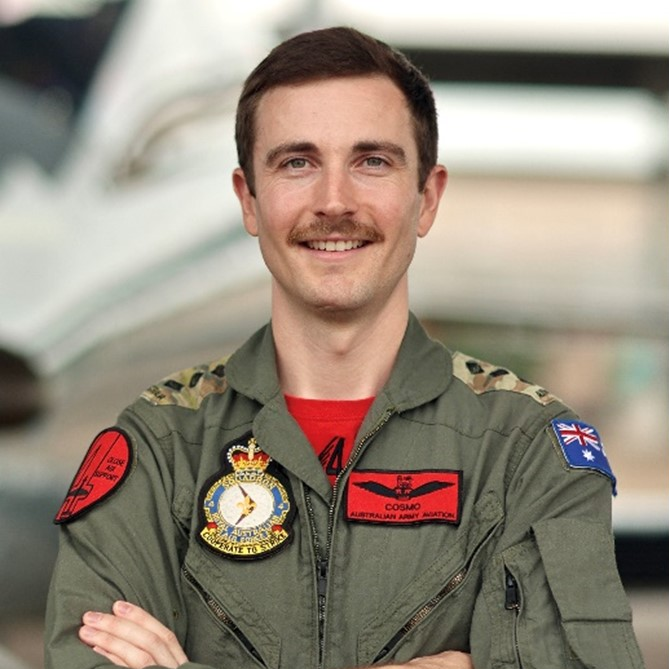
It’s very daunting for young people to pick something they want to do for the rest of their life; I certainly didn’t know exactly what I wanted to do ... Joining the Defence Force was the path that I went down and I’ve never looked back.
I joined 4 Squadron at the beginning of 2024. My role is to fly the PC-21 as an Army pilot with rotary wing experience, to contribute my knowledge to the Squadron for their training.
There is a wealth of diversity with the current members of 4 Squadron ... Reflecting on the formation of the squadron in the First World War, there is a similarity in that diversity that resonates with me. Group Captain Roy King’s desire to be close to the trenches in the frontline, providing support to the soldiers on the ground, is exactly the type of support that we still provide today..
Corporal Chrissy McCallum
I’ve been in the RAAF for five years now. I don’t have a lot of Defence history in my family, but my granddad served in Vietnam. I joined through the Gap Year Program and that’s what I’d recommend if someone isn’t too sure about joining, because it gives you that opportunity to change career paths or get out if it’s definitely not for you.
4 Squadron is different to the rest of Air Force. It’s a niche capability.
Looking back on the unit’s history, it makes me really proud to be at the unit and be continuing to support the unit. It’s a nice feeling. I hold myself to a high standard and coming into such a high-achieving unit with a group of high-achieving people ... I slotted in quite easily ... striving to be a better person and have really good outcomes with my work.
About Roy King
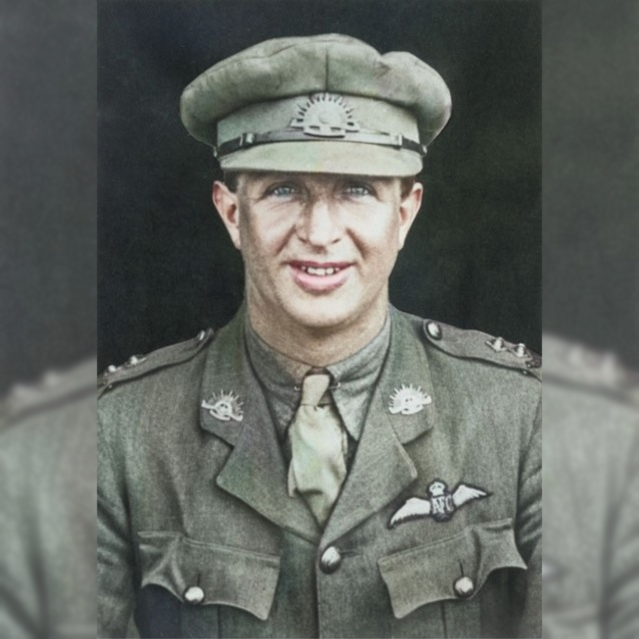
Elwyn Roy King was born to Richard King and Lizzie Miller at The Grove, Tuena (near Bathurst) in NSW on 13 May 1894. A motor mechanic in Forbes prior to the First World War, King enlisted on 17 July 1915 in the 12th Australian Light Horse Regiment.
During the First World War, Roy became the fourth highest-scoring Australian ace of the war, earning a Distinguished Service Order (DSO), Distinguished Flying Cross (DFC), and a Mention in Despatches.
Read more about Roy King in the linked booklet or view the video below.